


The freezer
Everything in it is on a clock the moment the power stops. The manual shows you what to eat first, and what to do before it thaws.
Chapters 3, 4 & 9
Printed paperback · Plain English · Delivery in 3–8 business days
The best time to read a blackout manual is while the lights are still on.
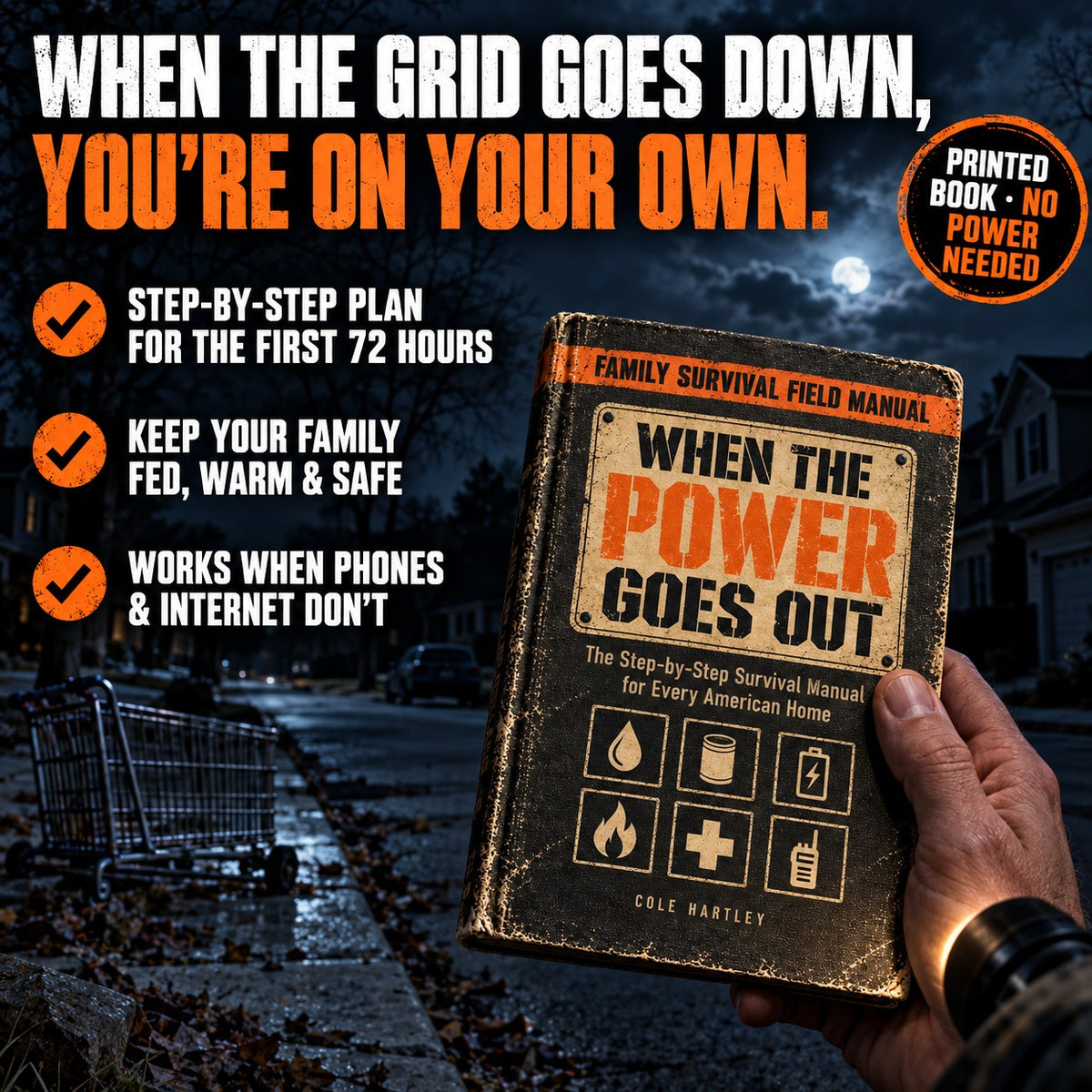
The lights go out. Your phone’s at 20%. What’s your plan for the next 72 hours? Most outages are short. Some aren’t. You won’t know which one this is until you’re already in it.
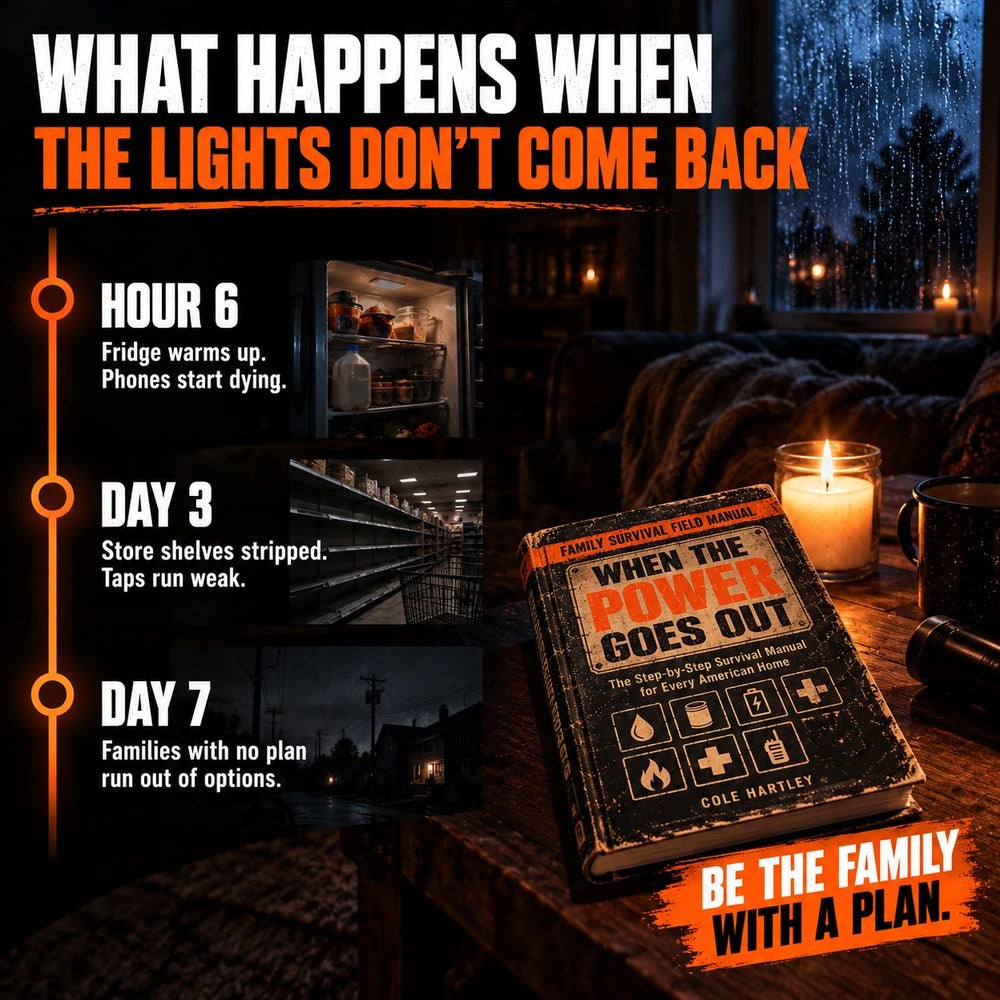
The fridge goes quiet. Your phone says 20%. The street is dark in both directions, and nobody can tell you when it’s coming back.
The fridge is warming. Phones are dying. Everyone is refreshing for updates that won’t load.
The freezer is thawing. Every room is the wrong temperature. You’re working out which food to eat first, and guessing.
The shelves at the store are emptying and nobody knows when the trucks are back. The tap runs weak. You realise “a few days” was never a plan.
Families with a plan are on a routine. Families without one are running out of options.
Help comes. It just doesn’t always come in the first days. Those days are on you, and on whatever you decided before the lights went out.
A conflict half a world away. One blocked shipping lane. One bad storm. An ageing grid under more strain every year. Any of them can turn off your lights, and none of them will warn you first.
The freezer, the tap, the furnace, the phone: everything in your home depends on one wire. Here’s what happens when it stops.
Everything in it is on a clock the moment the power stops. The manual shows you what to eat first, and what to do before it thaws.
Chapters 3, 4 & 9Pumps need power. When the pressure drops, the water you didn’t store is the water you don’t have.
Chapter 2Most heating systems need electricity to run their fans and controls. One warm room, set up safely, changes everything.
Chapter 6When phones and internet go down, how will your family find each other? Write the plan now, on paper.
Chapter 10Medicines that need the fridge and devices that need a plug. Make a written plan with your doctor for the days the pharmacy can’t open.
Chapters 1 & 7Dark streets, alarms off, supplies on show. Decide now how you’ll secure your home, so you’re not deciding in the dark.
Chapter 11Same street. Same storm. Same dark night. The only difference is what each family decided before it started.
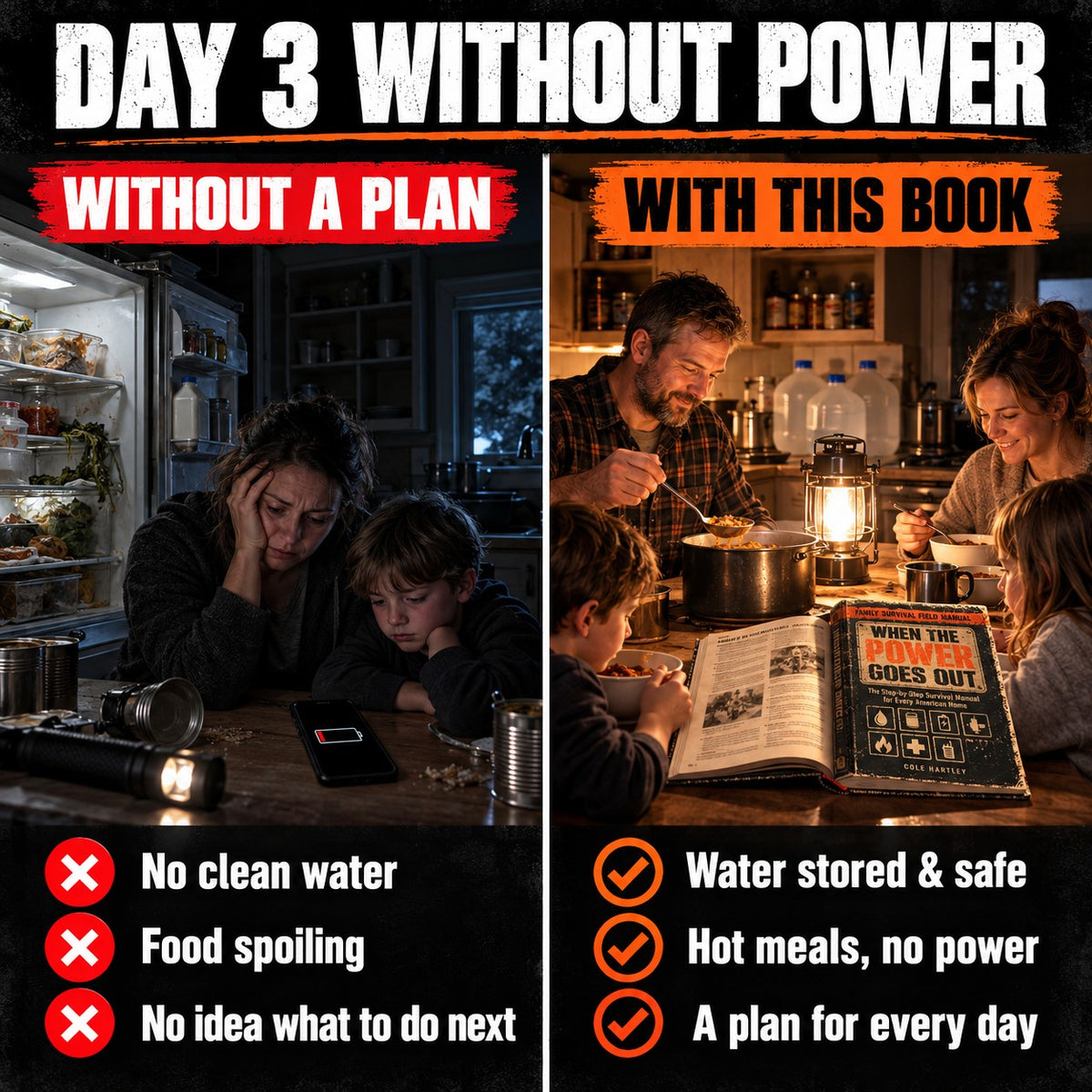
If your fridge is your food plan, you don’t have one yet.
Be the family with a planThe plan for the first 72 hours, the first week, and beyond. The manual is built around time, so you always know what matters right now and what can wait.
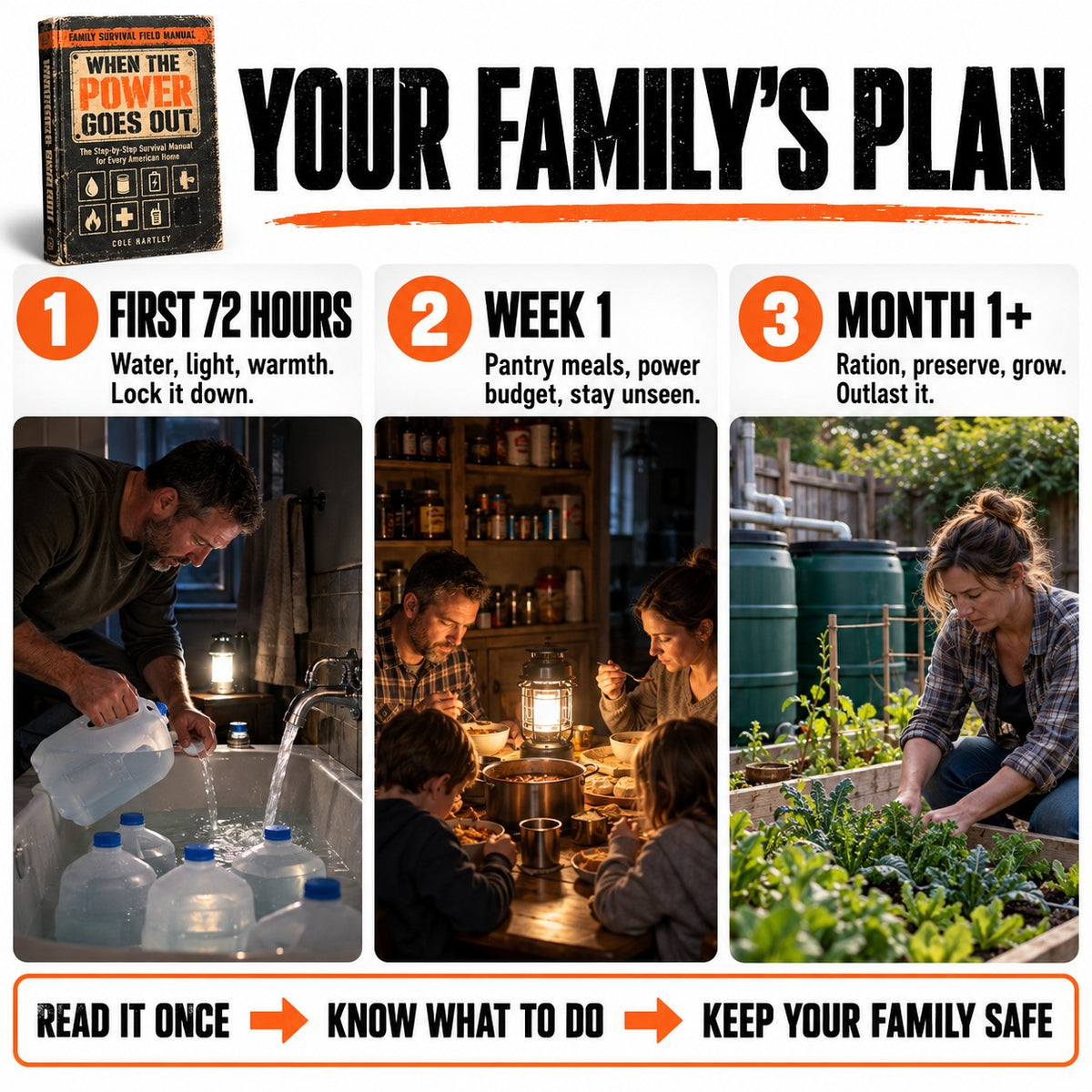
Water. Light. Warmth. Lock it down.
Settle into a routine.
Ration. Preserve. Grow. Outlast it.
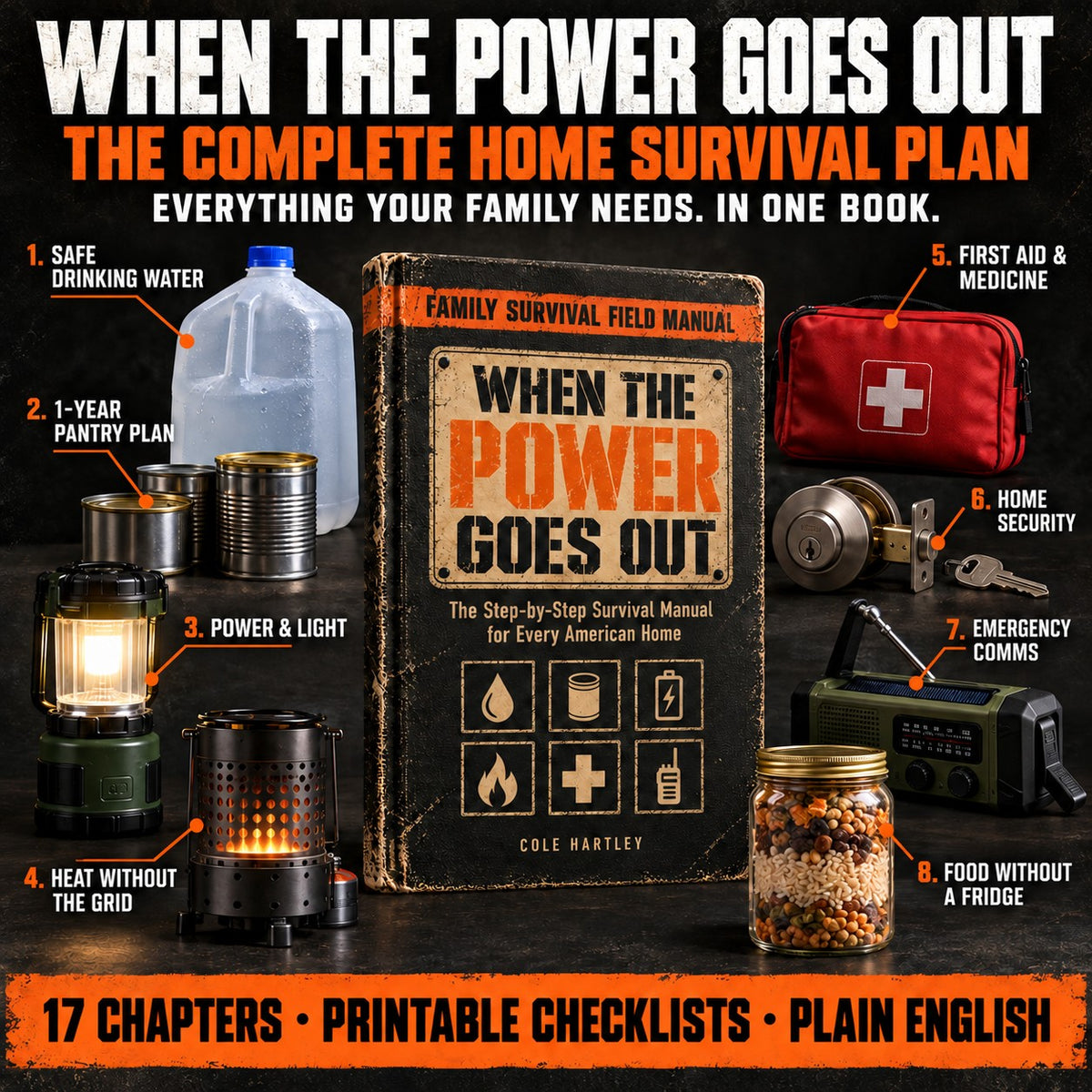
17 chapters in three parts, plus printable checklists. Everything your household needs, in the order you’ll need it.
Your local risks, your family’s needs (kids, older relatives, pets, medical devices) and starter, mid and full budget levels.
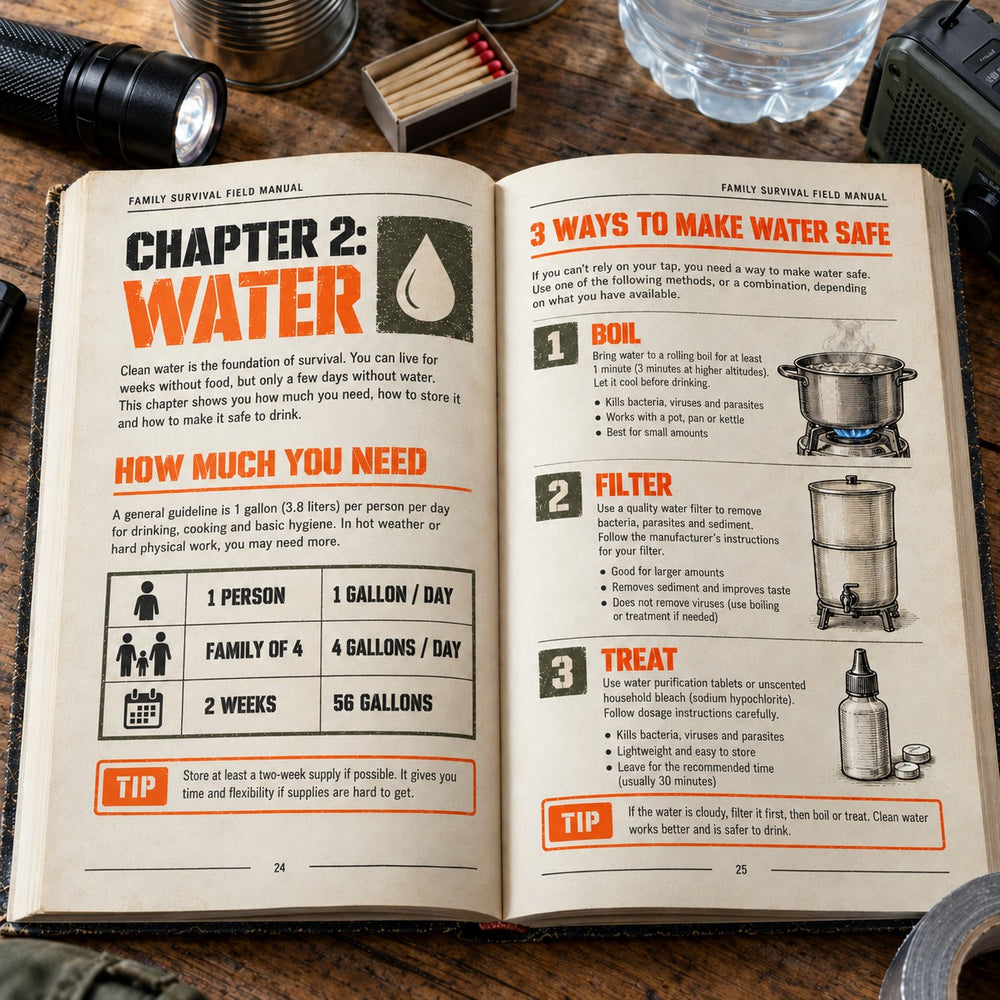
How much per person and pet, safe storage and rotation, boiling, filtering and treating, and what not to drink.
Store what you eat, rotate it, and build up to 3-month, 6-month and 1-year levels with everyday supermarket staples.
Canning, meals in jars, dehydrating, curing, root cellars, keeping eggs and fermenting.
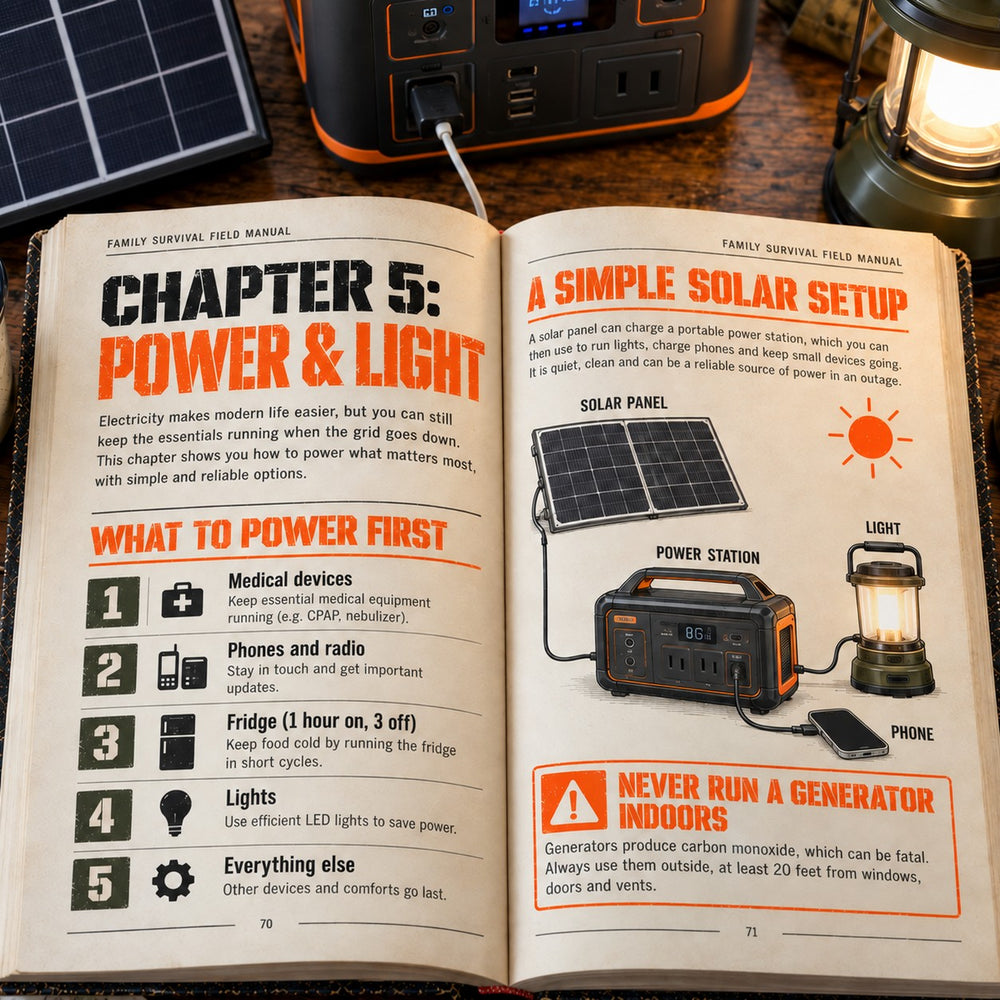
Portable power stations, small solar, safe generator use, batteries, charging from your car, and what to power first.
Keeping one room warm, insulation tricks, safe indoor heat, and staying cool in a summer outage.
A home first-aid kit, wound care, and planning prescriptions for an outage with your doctor or pharmacist.
Toilets when the water is off, waste, laundry without electricity and keeping the house clean.
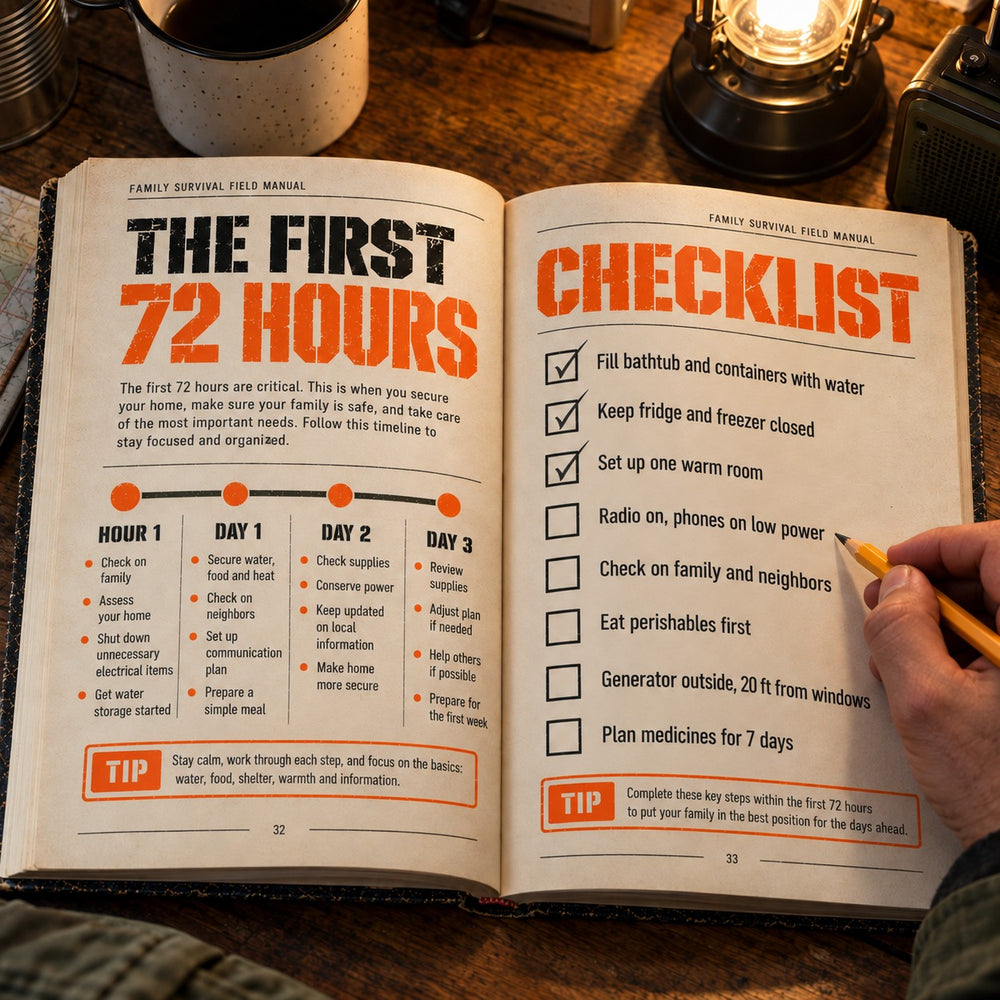
A step-by-step checklist for the first three days, hour by hour where it counts.
Battery and hand-crank radios, weather radio, a family contact plan, offline maps and charging phones.
Lawful, non-violent ways to secure your home, keep supplies out of sight and work with neighbors.
Cash on hand, useful trade goods and a grab-folder for your important documents.
Your grandparents knew how to run a home with no power. Most of us were never shown. Part 3 puts those skills back on your shelf.
Small-space gardens, perennials, seed saving, chickens and safe foraging basics.
A no-power cooler, a rainwater system, solar water heating, a root cellar and simple tools.
Starting fires, Depression-era cooking, mending, yeast-free bread, soap and candles.
Staying calm, routines for kids, community, and spotting scams in a crisis.
When staying isn’t safe: a go-bag, a car kit and how to plan your route.
Inventory sheets, a pantry rotation log, a 30-day plan and a family contact sheet.
Big headings, short steps and checklists you can follow by flashlight.

Cole Hartley served as a U.S. Navy SEAL, where planning for the moment everything stops working isn’t a hobby. It’s the job. You learn to think in hours, not hopes: what has to happen first, what can wait, and what you’ll do when the plan meets the dark.
After leaving the Navy, Cole turned that discipline on the place most families are least prepared: their own home. When the Power Goes Out is the plan he built for his own family. No bunkers. No tactical fantasy. Just what to do, in what order, when the lights go off.
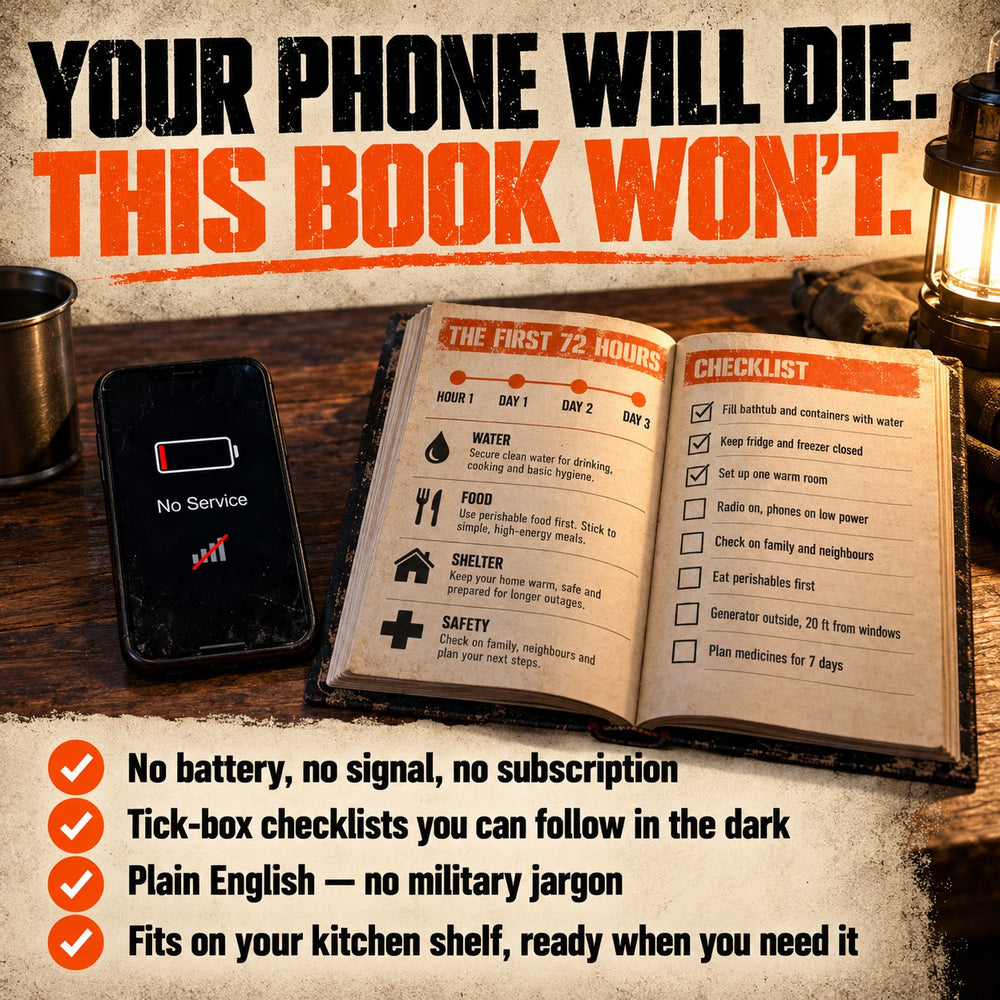
Right now every answer is one search away. In a long outage the signal drops, the battery runs down, and the answers go with them. Videos don’t play on a dead phone.
This manual is printed on paper. No battery, no signal, no login. Keep it on the shelf with your flashlight, and the plan is there the moment you need it.
When nothing else works, this still does.
The doubts that stop most people from preparing, and why they don’t hold up when the lights go out.
Search results don’t load when the network is down. This manual is already on your shelf.
Most outages are short. Some aren’t. You won’t know which one it is until it’s already happening.
No bunker. No wild gear. A plan for an ordinary home, using what’s already in it plus a short list of basics.
Supplies without a plan are just a pile in the garage. The manual tells you what to use first, how to ration it and what you’re missing.
Plain steps and tick-box checklists, written for people with jobs, kids and a normal house.
Start with the first 72 hours chapter tonight. The rest can wait for the weekend.
Water, pantry, light, heat, first aid and communication all work in small spaces. Only a few long-haul projects need a yard.
Help usually comes. Your job is the hours before it does.
Some of it is, scattered across a thousand pages you can’t open in a blackout. This puts it in one book, in the order you’ll need it.
Every road out is full of people who had the same idea. For most outages the safest place is the home you already know. Chapter 17 covers the day staying isn’t safe.
Freezing winters and summer heat are both covered: one warm room, safe indoor heat, and staying cool when the AC is off.
Neither does this book. Home security here means lawful, non-violent steps: doors, windows, a low profile and good neighbors.
Then you’ve got a pantry you actually rotate, less food in the trash, and a family that knows what to do in a storm. Nothing in here is wasted.
Price it against one thawed freezer. One book for the whole household, kept on the shelf for years.
Written for ordinary homes, not bunkers.
No bunker. No guesswork. Just the plan, hour by hour.
Everything in this book works best before you need it. Once the power is gone, the window closes fast.
A manual in the mail doesn’t help you tonight. A manual on the shelf does.
No signal, no battery, no search results. Only what you already know, and what’s already on paper.
The time to fill containers is before the tap runs weak, not after.
Food has to be planned before the outage, not during it.
Who goes where, who calls whom, where you meet. It only works if it was written down first.
Decisions made cold, tired and scared are the ones families regret. Make them now, with the lights on.
The only deadline is the next outage, and it won’t announce itself.
One printed manual. Everything your household needs to get through the first hour, the first 72 hours, the first week and beyond.
17 chapters in three parts: Get Ready, Ride It Out, The Long Haul. Plain English, big headings, short steps.
Hour by hour where it counts, so you know exactly what to do first.
Your risks, your family’s needs, and starter, mid and full budget levels so you spend only what you choose.
Inventory sheets, a pantry rotation log, a 30-day plan and a family contact sheet.
Power stations, small solar, safe generator use and charging from your car.
A go-bag, a car kit and how to plan your route, for when staying isn’t safe.
One long outage can cost far more than this book. The manual costs £29.00, once, and stays on your shelf for years.
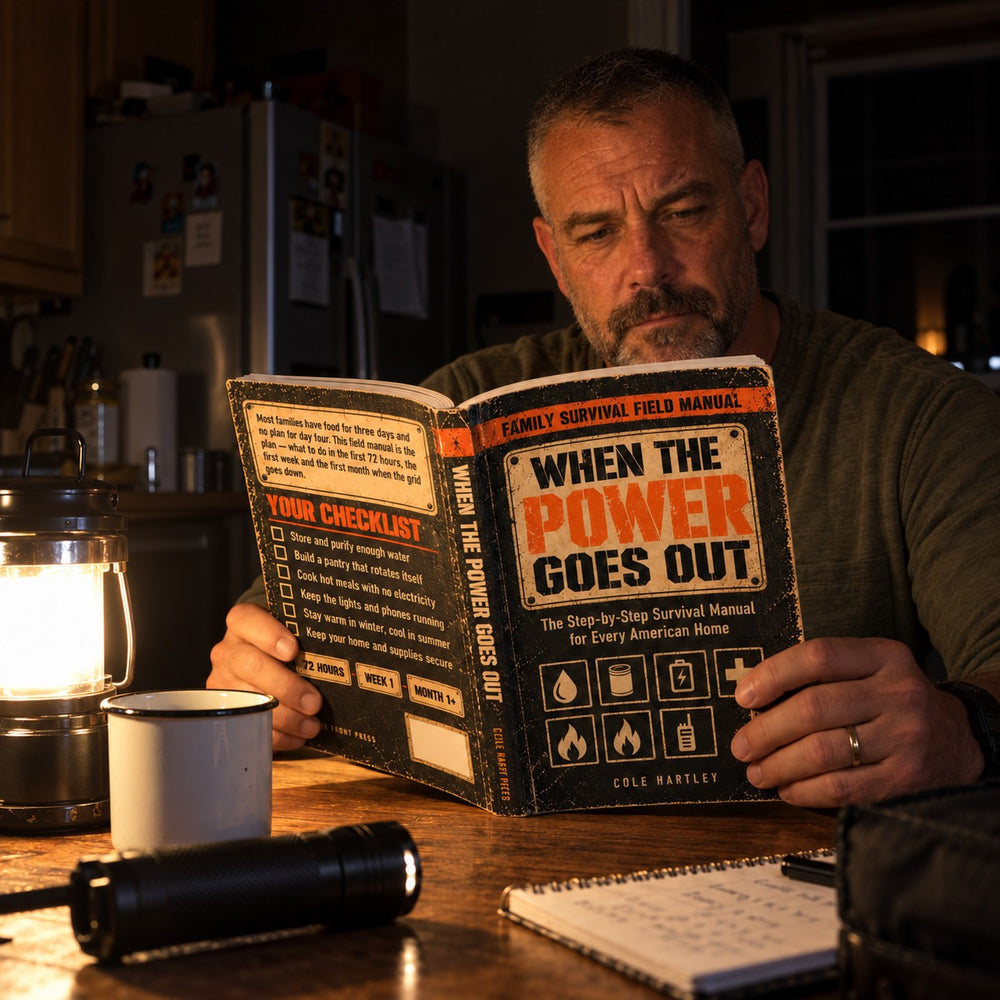
The house goes dark. Phones show no signal. Somewhere down the street a car alarm starts and stops.
You don’t panic. You take the manual off the shelf, open it to the first page and hand out the jobs. The water is already stored. The flashlights are where the book told you to keep them. By the time the kids ask what’s happening, there’s a light on and a plan for tomorrow.
A week later, your home runs on a routine. The neighbors start knocking, and it’s to ask what you’re doing, because you’re the one with the plan.
Now picture the same night without it. Same dark house. Same dead phone. Only this time, every decision is a guess.
The difference is a book you read while the lights were still on.
Yes. It’s a physical paperback, delivered to your door in 3–8 business days. There’s nothing to download and nothing to charge, so it works when your phone and internet don’t.
Because in a long outage you may not have either. Signals drop, batteries die and pages won’t load. A printed manual on your shelf still works by flashlight.
Yes. It’s written in plain English for ordinary households. Each chapter starts with the basics and gives you a short checklist to work through.
With the first 72 hours chapter. Read it tonight and you’ll know what to do in the first hour. The rest of the book can wait for the weekend.
No. The plan starts with what most homes already have, then shows optional upgrades at starter, mid and full budget levels.
Supplies are half of it. The manual tells you what to use first, how to make it last, and what you’re still missing.
Yes. Most of the plan (water, pantry, light, heat, first aid and communication) works in small spaces. A few long-haul projects, like gardens, need some outdoor space.
No. The first-aid and medicine sections are general education to help you prepare. For prescriptions and medical devices, talk to your doctor or pharmacist about an outage plan.
Cole Hartley is a former U.S. Navy SEAL who wrote this manual for his own family. He built it the way he learned to plan in the service: first things first, in hours, with a checklist.
For most outages, no. The safest place is usually the home you already know, and most of the book is about making it work. Chapter 17 covers the day staying isn’t safe: a go-bag, a car kit and your route.
Yes. It covers cold-weather outages (one warm room, insulation, safe indoor heat) and summer outages (staying cool with no AC), in houses and apartments.
Yes. Chapter 5 covers portable power stations, small solar, safe generator use, batteries, charging from your car and what to power first.
It helps you plan. Chapter 1 lists those needs in your readiness check, and Chapter 7 walks you through making an outage plan with your doctor or pharmacist. It is not medical advice.
This is the printed paperback, on purpose. A book on the shelf works when your phone, Wi-Fi and power don’t.
Yes. It’s a practical gift for parents, grandparents, new homeowners or anyone who has been caught out by an outage.
Delivery takes 3–8 business days. Your shipping options are shown at checkout before you pay, and you’ll receive an email when your order ships.
This book is for general educational purposes and is not medical, legal or professional advice. Always follow official guidance from your local authorities in an emergency.